Let’s give a voice to the forgotten!
Faced with the neglect of many medicinal plants, Phyto-info is committed to promoting the least known and least studied ones.
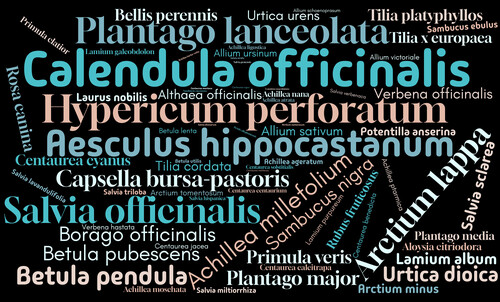
When you start to take an interest in medicinal plants, you start with the best known, the most accessible, those with which you are sure not to “mess up”… calendula (Calendula officinalis), sage (Salvia officinalis)… because when you pick a plant you have to be sure that it is the right one. Many of them are similar, and not all are benevolent towards humankind. Not that we want to alarm you, but still, let’s remain cautious.
So when you start to take an interest in plants, you start with the classics, and that’s good. There is a huge amount of information available. Almost all books on medicinal plants talk about it. They explain to us how to use them and which parts to use. Their contraindications, precautions for use and, where applicable, their toxicity are relatively easy to find. We are also informed about their drug interactions, whether they can be used when expecting a happy event, and whether they can be given to our offspring and from what age. And once again, that’s a good thing. It is reassuring to see that this knowledge is within reach of those who want to reclaim this ancestral knowledge.
But what about knowledge of lesser-known plants?
Certain plants, of obvious economic interest to large pharmaceutical industries, are well studied by researchers, and with open access publishing becoming increasingly widespread, it is now easy to access research papers. However, reading a research article is not always easy; you have to be able to decipher the language of scientists even if they write in your native language. And let’s not kid ourselves, research papers are often written in English. Therefore, to understand the results of a study, you need at least a scientific background, preferably in research, and English as a first or second language. You might say, it’s starting to get complicated to make herbal tea.
And then there are the great forgotten figures of history, which very few books mention and which no scientist studies simply due to lack of time or lack of funding. Knowledge of these plants, which has been eroding since the beginning of the industrial revolution, is now sinking into the meanders of time, leaving behind a deafening silence. Oh, it’s so poetic, it almost brings tears to your eyes 🙄
All this to say that, although some plants are very poorly represented in the literature, Phyto-info is committed to giving them a second wind by referencing them in our database, even if they are only found in one of our sources. However, we make sure that we have reliable data on their plant properties and traditional uses, including recommended dosages.
To discover our plant finder, head to this page.
If you are interested in our search tool, more info at phyto-info.com
And if you have any questions, please do not hesitate to contact us 🤗