News of September 2025!
What happened in September 2025 at Phyto-info… we tell you all about it!
Hello everyone 🌿
In the world of plants, there are those that occupy a central place in scientific studies and books, and then there are the others. The world of research and industry is merciless towards those whose commercial value is not tangible. They are simply ignored.
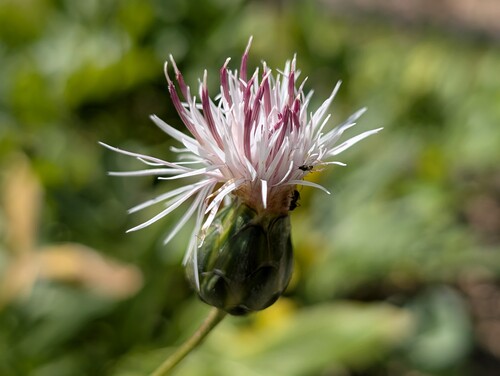
An excellent example of a widely studied European plant is St. John’s wort. While St. John’s wort generates more than 62,000 results on Google Scholar (a search tool for scientific articles), centaurea centaurium only shows 22, and none of the sources really talk about it, it is simply relegated to the background of the real subject of study.
Of the fifty or so books we consult to create our plant fact sheets, only three mention it. No matter, at Phyto-info, we are committed to giving a second wind to these forgotten plants of modern times by referencing them in our database. We even wrote an article about it (/en/blog/donnons-une-voix-aux-oubliees/).
It should be noted that the centaurea centaurium has not always had the same scientific name. Linnaeus in 1753 gave it the name Centaurea centaurium, except that he made a mistake by classifying it in the genus Centaurea. In his defense, at the time taxonomy was based on morphological criteria and not on genetic classification. Centaurea centaurium becomes Rhaponticoides centaurium, however it retains its small name of great centaury even though it is not one.
Although our plant profile has been ready for a long time, we unfortunately had to abandon its publication due to a lack of visual representation. Regardless of its scientific name, we simply couldn’t find any photos until one day, against all odds, while strolling through the botanical garden of Milly-la-Forêt, we saw it there, under its old name, in bloom and resplendent.
New plant 👏
- Centaurea centaurium (Rhaponticoides centaurium)
Discover now the 5 ancestral (and forgotten) uses of the centaurea centaurium (Rhaponticoides centaurium) that we have carefully listed on our platform.
Our upcoming workshops 👏
Practical information about the workshops
- Every second Sunday of the month from November to April
- From 1 p.m. to 3 p.m. in Voillans
- Groups of 4 participants maximum
- Member price 10 euros - Non-member price 30 euros
Themes of the 6 workshops
- Vinegar and oxymel workshop (November 9)
- Plant syrups workshop (December 14)
- Infused oils and ointments workshop (January 11)
- Infusion and decoction workshop (February 8)
- Workshop on powders, capsules and tablets (March 8)
- TIncture, wine and elixir workshop (April 12)
First date, November 9th 🥰
What exactly is an elixir? And why combine plants with vinegar? In this workshop, we explain what they are and how to prepare them. On the menu, among other things, is a fiery vinegar ideal for dealing with the first signs of a cold.
More information on our website phyto-info.com/atelier. Reserve your place, contact us (contact@phyto-info.com) 🤗
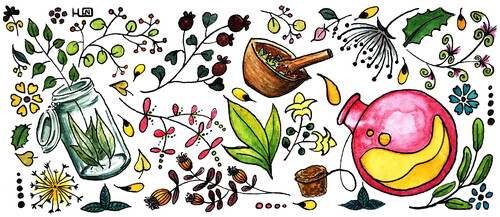
And a big thank you to Hélène from the P’tites Boussoles workshop for the illustration that will accompany our workshops this season.
Celebration 👏
We passed the 90-plant mark this month, next goal… 100 😳 🎉
Would you like to know more about a particular plant? If you are a member, send us their name by email, and we will add it to our database so that it can be viewed by everyone. Every contribution counts towards making this search tool a collective success, we’re counting on you 👏
We were asked for the blue mallow (thank you), we’ll get to it soon.
🌿 🌻 🌾
This was the news of our month of September, if our search tool interests you, more information on phyto-info.com.
To discover our plant finder, head to this page.
And if you have any questions, please do not hesitate to contact us 🤗
Next newsletter in a month! Stay tuned!